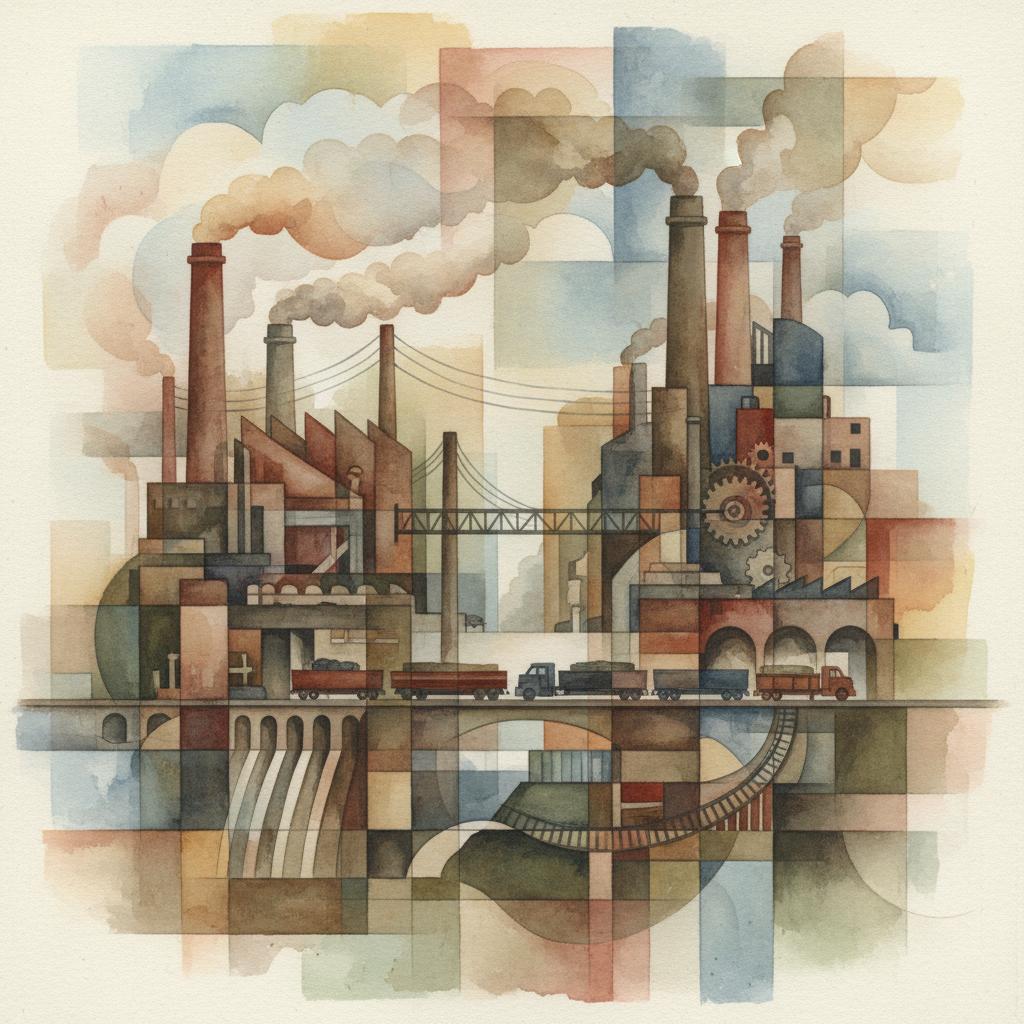
Across dozens of sectors, owning the rulebook has become more lucrative than manufacturing the product itself. When a standard gains legal protection or public trust, outsiders cannot compete without the mark, so fees for audits, training, and labels turn into predictable revenue streams. The result is a quiet shift from selling things to charging tolls for access to a private infrastructure.
The Business of Control: How Standards Become Profits
- Companies increasingly monetize standards rather than physical products.
- Trademark control, licensing contracts, and mandatory testing underpin the model.
- HDMI shows how network effects turn technical rules into global tollbooths.
- Green labels such as LEED and USDA Organic generate recurring certification fees.
- Format-locked consumables and franchising extend the same pattern to coffee pods and fast food.
The Archetype: HDMI
The High-Definition Multimedia Interface is governed by HDMI Licensing Administrator, a company that controls both the technical specification and the trademark. Manufacturers sign a contract that details registration fees, per-port royalties, and mandatory compliance testing before the brand may appear on a cable or device.
As of 2025, one HDMI adopter plan charges a flat US$10,000 annual fee. Another offers a lower annual fee (around US$5,000) plus an administration charge of about US$1 per HDMI product, creating a sliding scale that still rewards the rights holder as volumes grow. Either way, revenue flows even if the licensor never touches a factory line.
Ubiquity locks the system in place. Televisions, game consoles, laptops, and streaming sticks all rely on the port, so leaving it out would strand customers. "Our entire ecosystem—the Specification itself, our Adopters, Adopter training and compliance testing—ensures that all HDMI-enabled products interoperate and deliver that seamless experience that consumers expect," Steve Venuti said in a 2015 press statement published by HDMI.org.
More Business Articles




Core Mechanics of a Logo-Standard Empire
Most proprietary-standard businesses follow a five-step formula. First, they publish an authoritative document—technical, procedural, or geographic—that defines how something must be built or grown. Second, they trademark a logo that certifies compliance. Third, they demand a pay-to-play contract that spells out annual dues and unit royalties.
Fourth, they employ laboratories or auditors that gatekeep access through tests and site visits. Fifth, widespread consumer recognition of the mark reinforces adoption, forming a feedback loop that makes the standard hard to ignore. Once these parts click together, the owner collects cash with minimal capital outlay while licensees shoulder manufacturing risk.
The structure resembles software subscriptions rather than one-time sales. Revenues grow as licensees proliferate, yet administrative costs stay modest—mostly document updates and trademark enforcement. That imbalance explains why investors prize such portfolios even when the underlying technology no longer feels cutting-edge.
Certification Labels and Building Badges
Green construction offers a textbook example. A commercial tower that seeks LEED Gold must pay a registration fee of US$1,350 plus review fees that climb to roughly US$0.064 per square foot, data from the U.S. Green Building Council show. The plaque on the lobby wall, not the concrete and glass, triggers the bill.
ENERGY STAR certification appears free at first glance, yet applicants must hire a licensed engineer or architect—incurring additional professional fees—to verify performance benchmarks, according to ENERGY STAR guidance. The program illustrates how testing expenses, rather than direct license fees, can still generate economic activity around a logo.
Agriculture pushes the idea further. The USDA reimburses up to 75 percent of annual organic-certification costs through its cost-share program, yet farmers still pay accredited auditors first, channeling money toward a network of private certifiers, according to the Farm Service Agency. Public subsidies thus help sustain a fee-driven ecosystem that operates under federal standards but private enforcement.
Geographic Indications and Food Purity Seals
Only sparkling wine made within the borders of France’s Champagne region may legally use the celebrated name in 122 countries, reports Comité Champagne. The restriction functions like a collective trademark: insiders enjoy premium pricing, while outsiders must rebrand.
Similar protections cover Parmigiano Reggiano cheese, Roquefort, and other foods whose identity depends on place and process. Enforcing those boundaries requires lawyers and inspectors, but the underlying asset is intangible—exclusive rights to four or five words on a label.
For regulators, such steps reduce fraud and preserve cultural heritage. For producers, they create a club good that gains value as enforcement tightens, echoing HDMI’s logic that stricter compliance ultimately raises the toll each participant will pay.
Format-Locked Consumables
Keurig’s 2.0 coffee system embedded radio-frequency tags that rejected unlicensed or refillable pods, a move the company later reversed after consumer outrage chronicled by the Washington Post. The episode showed how a physical interface, coupled with digital rights management, can funnel revenue toward an IP holder long after the brewer is sold.
Printer makers tried a similar tactic. HP pushed a 2016 firmware update that disabled third-party ink cartridges, citing quality and security concerns before walking back the block under pressure, the Washington Post reported. Critics argued the change functioned less as protection and more as a tollgate.
Both cases mirror the razor-and-blade model: sell the handle cheaply, lock the blades behind proprietary gates, and collect steady margins. Where traditional patents expire, proprietary interfaces can extend control indefinitely.
Franchising as Services Standardization
Restaurant and hotel chains apply the same template to human processes. The U.S. Federal Trade Commission notes that a would-be franchisee pays an initial fee that can run into the tens or even hundreds of thousands of dollars, then sends a royalty percentage and advertising contribution for as long as the outlet operates, according to the FTC.
McDonald’s adds a financial screen by requiring at least US$750,000 in unencumbered personal resources before it will consider an applicant, data on McDonald’s Corporation show. The cash hurdle underscores how valuable access to a standardized operations manual and golden arches has become.
Like HDMI adopters, franchisees submit to periodic inspections and brand audits. Compliance secures the right to use a globally recognized logo and business system, while the franchisor collects royalties without running every kitchen or front desk.
Economic and Policy Implications
Proprietary standards generate high-margin income that resembles rent on intellectual property. Because the licensor invests mainly in documentation and enforcement, returns can dwarf those of asset-heavy manufacturing once a logo dominates its niche.
The flip side is concentrated power. Small cable makers, coffee roasters, or farmers often face a single gatekeeper that can raise fees or tweak rules with limited warning. Bargaining power sinks as dependence grows.
Regulators have started to ask whether some marks function as essential infrastructure. Right-to-repair campaigns and antitrust probes frame proprietary interfaces as potential bottlenecks that hinder competition and inflate consumer prices.
Strategic Responses
Industry coalitions sometimes create open or royalty-free alternatives. USB, for instance, spreads through an implementers forum that charges modest dues and publishes specifications without per-device levies, offering a contrast to HDMI’s royalty model.
Governments can tip the balance by defining public standards whose logos are free once performance thresholds are met. ENERGY STAR’s appliance label follows that path by waiving trademark fees while still requiring measurable efficiency gains.
Adopters can also negotiate collectively. When major TV manufacturers pressed for lower HDMI royalties in past revisions, they leveraged their buyer power to temper tolls—though the basic pay-to-play structure survived.
Conclusion
From cable ports to coffee pods to the color of a restaurant’s awning, the most profitable product is often a rulebook backed by a trademark. Each fee and audit may appear small in isolation, yet together they create steady cash flows that rival physical production.
Whether upcoming right-to-repair laws or open-standard movements will blunt those flows remains uncertain. What is clear is that as long as consumers trust a logo to guarantee quality—or devices need a shared port to talk—owning the emblem can be more valuable than owning the factory floor.
Sources
- HDMI Licensing Administrator. "Adopter Register." hdmi.org, 2025.
- HDMI Licensing Administrator. "Press Release." hdmi.org, 2015.
- U.S. Green Building Council. "LEED Certification Fees." usgbc.org, 2025.
- ENERGY STAR. "How to Apply." energystar.gov, 2025.
- Farm Service Agency. "Organic Certification Cost Share Program." fsa.usda.gov, 2025.
- Comité Champagne. "Paraguay Recognizes and Protects the Champagne Appellation of Origin." champagne.fr, 2020.
- Washington Post. "Keurig’s K-Cup screw-up and how it k-pitulated to angry consumers." washingtonpost.com, 2015.
- Washington Post. "HP removes update that forces customers to use on-brand ink cartridges." washingtonpost.com, 2016.
- Federal Trade Commission. "A Consumer’s Guide to Buying a Franchise." ftc.gov, 2020.
- McDonald’s Corporation. "Franchising Overview." corporate.mcdonalds.com, 2025.
Article Credits