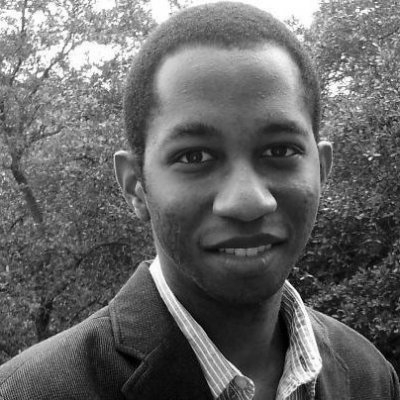
Biographical data on George Friedman compiled by Encyclopedia.com lists him as founder and director. A 2001 feature in the Austin Chronicle describes that center as Stratfor's "prior incarnation," reporting that Friedman left the university in 1996, pooled remaining center funds, added personal capital, and started Stratfor as a private intelligence consulting firm before relocating the operation to Austin in 1997.
LSU's Office of Academic Affairs records include a topical file labeled "Center for Geopolitical Studies 1994," as listed in an inventory published by LSU Libraries. While the finding aid does not describe the folder's contents, the listing indicates an administrative record for CGPS that predates or overlaps the 1995 founding date described in later reporting.
LSU Research That Seeded a Private Intelligence Firm
- Louisiana State University's Center for Geopolitical Studies (CGPS) operated in the mid-1990s under founder and director George Friedman.
- CGPS combined academic expertise with external funding (Sun Microsystems) and computationally oriented methods including Geographic Information Systems (GIS).
- Leonard Hochberg co-founded and co-directed CGPS, leading research teams applying GIS to ethnic mobilization, supply chains, and war games.
- In 1996 Friedman left LSU and started Stratfor as an intelligence consulting firm, relocating to Austin in 1997.
- The operation built early visibility through frequent email intelligence updates.
Forming the Center for Geopolitical Studies
Encyclopedia.com's entry on George Friedman lists his role at Louisiana State University as "founder and director" of the Center for Geopolitical Studies in the mid-1990s.
A 1994 grant from Sun Microsystems is listed among Friedman's awards; the Austin Chronicle identifies Sun Microsystems as an early funder of the LSU center. The Austin Chronicle reports that Friedman founded CGPS at LSU in 1995 with the goal of combining "objective foreign policy analysis" with advanced technologies.
More Business Articles




Leonard Hochberg's Role and the Use of GIS
Leonard Hochberg's profile at the Foreign Policy Research Institute states that while at LSU he co-founded and co-directed the Center for Geopolitical Studies. The same profile notes that he taught at Stanford University and was named a fellow at the Hoover Institution, bringing an academic background in political theory and European history to the Baton Rouge project.
According to that FPRI biography, Hochberg worked at CGPS with research teams on applications of Geographic Information Systems (GIS) to ethnic mobilization, supply chains, and war games.
GIS tools store and analyze data by location, enabling researchers to map patterns and test how risks cluster around particular territories, routes, and infrastructure. These spatial analysis and scenario methods laid groundwork for Stratfor's later positioning as a decision-support service, blending regional and political analysis with data-intensive mapping.
Administrative Tensions and the Decision to Leave LSU
The Austin Chronicle reports that by 1996, disagreements had emerged between Friedman and LSU administrators over the Center for Geopolitical Studies. In Friedman's account, as presented in that article, senior figures at the university did not share his view of the center's importance or its potential as a platform for applied geopolitical work.
The dispute contributed to Friedman's decision to leave the university. Hochberg's FPRI biography also notes that he co-founded Strategic Forecasting, Inc. (STRATFOR), suggesting that CGPS leadership and methods carried over into the new corporate form.
Relocation to Austin and Early Stratfor Development
The Austin Chronicle reports that in the summer of 1997, Friedman and his team moved Stratfor's operations to Austin, Texas. The feature attributes the choice to factors including a large research library at a major university, a pool of young talent, and a technology presence, even though Austin was not known as an intelligence hub.
Stratfor built its early profile through daily Global Intelligence Updates distributed by email, using the updates as both a demonstration of its analytical framework and a marketing channel designed to attract subscription and consulting clients.
From University Unit to Private Intelligence Business
Across archival listings, biographical entries, and contemporary reporting, the record shows a compressed progression from campus center to private firm. CGPS appears as a mid-1990s LSU initiative and is described by the Austin Chronicle as Stratfor's immediate predecessor.
The through-line is an attempt to formalize geopolitical analysis into repeatable methods that could shift from academic research to client-facing products built around recurring updates.
Hochberg's dual role in both CGPS and Stratfor illustrates how a small research unit's personnel and working style can migrate into a commercial organization once the work is reorganized around client demand rather than campus priorities.
Conclusion
Stratfor's early years at Louisiana State University illustrate how a campus research unit can become the foundation for a private intelligence company. The Center for Geopolitical Studies connected academic expertise, external funding, and computationally oriented methods in ways that later translated into a consulting and subscription model.
The LSU period was formative: it is where key personnel assembled and where the blend of geopolitical analysis, spatial data tools, and scenario-oriented work took recognizable shape before being reorganized as Stratfor in Austin.
Sources
- "Friedman, George 1949-." Encyclopedia.com, 2005.
- "Is Knowledge Power?." Austin Chronicle, 2001.
- "Contributor biography." Foreign Policy Research Institute, 2024.
- "Louisiana State University Office of Academic Affairs Records, RG A0100, Inventory." LSU Libraries Special Collections, 2015.
Article Credits