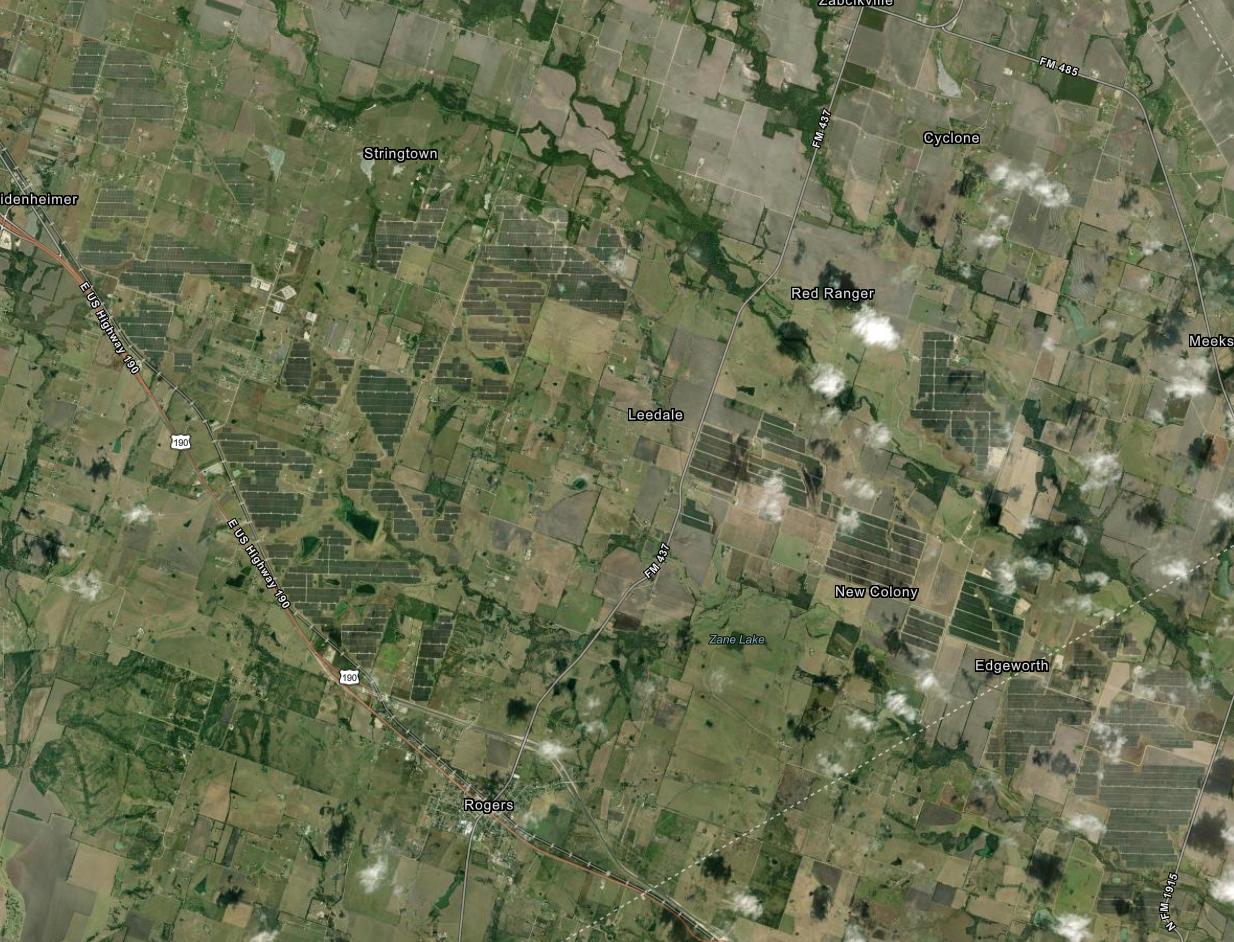
The region illustrates how broad eligibility rules, large landholdings, and thin verification capacity can create conditions in which improper payments are harder to detect and harder to unwind.
Key Findings
- Texas remains the largest recipient state in the federal farm subsidy system, making West Texas a useful case study for subsidy oversight risks
- Absentee ownership is often legal under USDA eligibility rules, but false certifications about engagement, acreage, or management can create actionable fraud exposure
- Federal crop insurance has faced persistent improper payment problems, including a 5.58 percent rate in 2014 tied in part to reporting mismatches
- The Conservation Reserve Program accepted nearly 1.8 million acres in its 2025 enrollment cycle, and large holdings create verification challenges when land use changes are not promptly reported
- USDA oversight capacity weakened after staffing losses in the first half of 2025, including 2,673 departures from NRCS, reducing field presence and compliance capacity
- False Claims Act incentives are meaningful, but successful reporting requires original evidence, first-to-file priority, counsel, and tolerance for retaliation risk
Absentee ownership and eligibility rules
The clearest starting point is absentee participation. In a 2025 analysis, the Environmental Working Group reported that between 2020 and 2024, $2 billion in farm subsidies went to 79,458 recipients living in major metro areas.
The finding shows how far subsidy payments can travel from the land that generated them. USDA policy helps explain why.
The Farm Service Agency states that participants generally must make significant contributions to be considered actively engaged in farming. It also states that landowners will be considered actively engaged on owned land even if the usual labor or management contributions are not being made.
In practice, that means absentee ownership can be fully lawful under program rules. The legal question changes when program participants misstate who is actually managing an operation, who bears risk, or whether a structure qualifies for payment.
In those cases, the misstatement is a false certification, and civil or criminal exposure can begin.
More Business Articles




Crop insurance and improper payments
Crop insurance is a separate and often more document-intensive risk area. USDA material from the Risk Management Agency reported improper payment rates of 4.08 percent in 2012, 5.23 percent in 2013, 5.58 percent in 2014, 2.20 percent in 2015, and 2.02 percent in 2016.
Those figures encompass eligibility and payment errors beyond fraud, but the rates were substantial enough to trigger sustained integrity efforts. USDA has also identified a recurring operational weakness: mismatches between acreage reported to crop insurers and acreage reported to the Farm Service Agency.
In its supplemental measures material, RMA said the program crossed the federal threshold for a high-priority improper payment program in fiscal year 2014. It pointed to tens of thousands of eligible contracts with acreage reporting discrepancies.
That matters for West Texas because the region’s cotton-heavy production base is deeply tied to the same federal insurance framework. A false loss report, an understated harvest, inflated prevented-planting acreage, or a mismatch between certified acreage and actual field use can all become federal payment issues.
The size of many operations also means that a small percentage error can produce a large dollar effect. Public enforcement records show how these schemes are framed when they mature into litigation.
The Department of Justice, for example, obtained a crop-insurance False Claims Act judgment in Washington state over hidden wheat sales and false production-loss claims. Other DOJ matters have involved forged applications, false acreage reporting, and manipulated records.
These are not West Texas cases, but they show the types of conduct investigators already recognize as actionable.
Conservation programs and field verification
The Conservation Reserve Program presents a different oversight problem. According to a 2025 announcement from the Farm Service Agency, USDA accepted nearly 1.8 million acres through the 2025 CRP enrollment cycle. About 25.8 million acres are currently enrolled in CRP, according to the same FSA announcement, against a statutory cap of 27 million acres.
CRP pays participants to remove eligible land from production under contract, which makes ongoing land-use verification central to program integrity. The main risks are straightforward. A parcel may be enrolled even though it does not satisfy program conditions, or land under contract may quietly return to production while payments continue.
Those risks become harder to monitor where contracts cover large, dispersed tracts and county offices have limited time for repeat site checks. West Texas dryland operations fit that profile.
On paper, aerial imagery and remote checks can help confirm cover and activity. In practice, a discrepancy still has to be reviewed, documented, and pursued through an office system that may already be stretched across hundreds of contracts and multiple program types.
Governance and resourcing constraints
Formal enforcement authority sits with USDA oversight bodies and, when cases escalate, the Justice Department. The USDA Office of Inspector General describes its investigations work as addressing fraud, waste, and abuse involving USDA programs.
Program-specific compliance work also runs through agencies such as RMA and through local Farm Service Agency administration. The practical weakness is the mismatch between payment volume and verification capacity.
County committees and local offices are close to the facts on the ground, but they also operate in communities where professional, business, and family ties can make aggressive referrals more difficult. This is especially true in disputes that turn on management roles, field conditions, or ownership structure rather than an obvious forged document.
That pressure intensified in 2025. A December 2025 USDA Office of Inspector General report found that 2,673 employees, or 22 percent of staff, left the Natural Resources Conservation Service between January and June 2025. The same report found that more than 20,000 workers left USDA agencies in that period. The report's findings were first detailed by DTN Progressive Farmer.
For conservation compliance, technical review, and field presence, that kind of contraction matters. Fewer people are now available to review anomalies, conduct follow-up, and build cases strong enough to survive administrative challenge or litigation. In a region where operations can stretch across many fields and counties, that constraint is material.
Incentives for outside reporting
For neighbors, vendors, former employees, and independent researchers, the main legal incentive is the False Claims Act. The Department of Justice states that a successful qui tam relator typically receives 15 to 30 percent of the recovery.
DOJ also said in its fiscal year 2025 False Claims Act summary that whistleblower suits generated more than $5.3 billion in settlements and judgments in that year. They remain a major enforcement channel.
That framework can apply to agricultural cases when a person has original, non-public information showing that a claim to the federal government was false. The theory requires showing that a participant knowingly submitted or caused the submission of a false claim, false certification, or false record tied to federal money.
Agricultural examples exist, though they are not concentrated in one region. DOJ has pursued crop-insurance and farm-related False Claims Act matters involving false loss claims, forged paperwork, undisclosed sales, and improper reimbursement requests.
Those cases suggest that recovery is possible when evidence connects a specific certification or payment request to a specific falsehood.
What investigators need, and what they risk
The evidence bar is high. Absentee ownership may be permitted, so evidence must go beyond residency alone.
The more useful evidence is documentary and comparative: certifications filed with FSA or an insurer, maps and acreage records, production reports, contract files, payment records, ownership documents, and imagery showing land use that conflicts with what was reported.
Procedure matters as much as proof. False Claims Act cases are filed under seal, and first-to-file rules reward the earliest claimant with a viable original case.
Information that is already public can still have investigative value, but it may not support relator status unless the filer qualifies as an original source under the statute. They must be able to contribute non-public evidence that materially advances the claim.
The personal risks are also specific. DOJ anti-retaliation protections are strongest for employees, not for every business partner, contractor, neighbor, or outside researcher.
In a tightly networked agricultural region, a reporting decision can carry business and social costs even if the legal theory is sound and even if the complaint is initially filed under seal.
These conditions converge in West Texas. The region produces oversight risk through the combination of high payment volume, broad eligibility categories, and fewer people available to verify what was claimed.
Under those conditions, the difference between legal subsidy use and actionable fraud often turns on records that only a well-prepared investigator, auditor, or whistleblower is positioned to assemble.
Sources
- Environmental Working Group. "Farm Subsidy Database." Environmental Working Group, 2026.
- Environmental Working Group. "‘City slicker’ farm payments top $2B - and House GOP bill would make problem worse." Environmental Working Group, 2025.
- U.S. Department of Agriculture, Farm Service Agency. "Actively Engaged in Farming." Farm Service Agency, 2026.
- U.S. Department of Agriculture, Risk Management Agency. "The Risk Management Safety Net: Market Penetration and Potential." Risk Management Agency, 2017.
- U.S. Department of Agriculture, Risk Management Agency. "Supplemental Measures." Risk Management Agency, 2026.
- U.S. Department of Agriculture, Farm Service Agency. "USDA Accepts Nearly 1.8 Million Acres Through 2025 Conservation Reserve Program Enrollment." Farm Service Agency, 2025.
- U.S. Department of Agriculture, Office of Inspector General. "USDA OIG." U.S. Department of Agriculture, 2026.
- U.S. Department of Agriculture, Office of Inspector General. "U.S. Department of Agriculture Staffing Levels." USDA OIG, December 2025.
- Chris Clayton. "A Year of Scorched Earth at USDA With Mass Firings, Canceled Grants and Reorganization." DTN Progressive Farmer, 2025.
- U.S. Department of Justice. "The False Claims Act." U.S. Department of Justice, 2026.
- U.S. Department of Justice. "False Claims Act Settlements and Judgments Exceed $6.8B in Fiscal Year 2025." U.S. Department of Justice, 2026.
- U.S. Department of Justice. "United States Obtains $607,284 Crop Insurance False Claims Act Judgment Against Klickitat County Farm Owner." U.S. Department of Justice, U.S. Attorney's Office for the Eastern District of Washington, 2023.
Article Credits