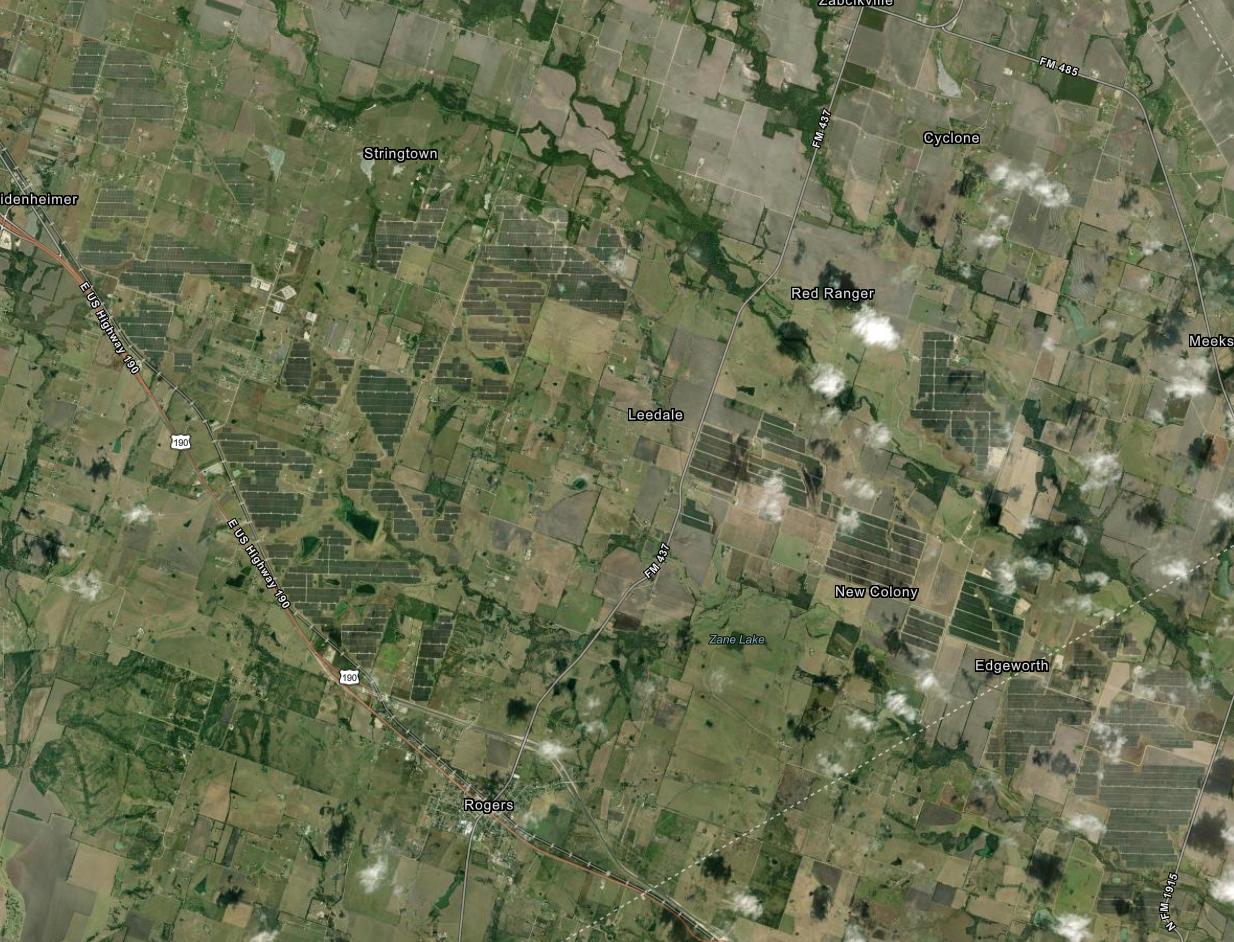
The gap, roughly eighteen applications for every projected employer formation, shows that application data captures entrepreneurial intent far more readily than the creation of durable operating firms.
For businesses already operating, survival conditions are equally distant from the aggregate impression. The lived economy for small and midsize firms is defined by capital-market disengagement, absorption of losses inside households and workforces, and quiet depreciation of organizational substance behind stable-looking financial statements.
Key findings
- June 2026 Census data recorded more than half a million business applications but projected fewer than 30,000 employer formations from the same cohort within four quarters.
- The Federal Reserve's July 2026 Senior Loan Officer Opinion Survey shows small-firm lending standards stable at the tighter end of their post-2005 range, with strengthened loan demand only among large and middle-market firms.
- Business bankruptcy growth accelerated across three consecutive US Courts reporting windows, reaching nearly 17 percent year over year by June 2026.
- Many small and midsize firms now rely on owner subsidy and household balance sheets to bridge operating cash-flow shortfalls.
- Deferred maintenance and curtailed investment can preserve reported cash flow while consuming organizational capacity.
- The middle-market cohort faces a distinct structural position, with obligations too large to survive informally and scale too small to dictate terms to counterparties.
Credit Conditions and the Applicant Pool
The Federal Reserve's July 2026 Senior Loan Officer Opinion Survey, covering the second quarter, reported basically unchanged commercial and industrial lending standards across firm sizes. Loan demand from large and middle-market firms strengthened over the period, while small-firm loan demand was basically unchanged.
Banks placed most major loan categories at the tighter end of their post-2005 range. Commercial and industrial standards were an exception, sitting somewhat easier than the midpoint of that period.
Credit conditions have stopped deteriorating, but stabilization at a restrictive level does not amount to easy credit. Firms insulated by pre-cycle fixed-rate debt, low occupancy costs, or owners willing to absorb prolonged underperformance operate in a different financing environment from those dependent on current-cost refinancing or short-term working capital.
Stabilization at these levels is compatible with a broadly restrictive credit environment for the firms most likely to need external financing. The pool of small-firm applicants has already narrowed through self-selection, as owners who anticipate rejection or unaffordable pricing increasingly do not apply.
Measured demand data therefore describes a filtered population rather than a representative one.
The second-order effects extend into inventory, staffing, and capital investment. Firms unable to finance seasonal working capital reduce inventory turns and defer hiring, both of which compress operational capacity without registering as distress in the underlying financial statements. The visible profile of a firm operating below its own capacity can remain identical to that of a firm operating at capacity in a healthier environment.
More Business Articles




Household Balance Sheets as Operating Capital
A meaningful share of nominally independent operating companies function as partly household-financed institutions. They remain viable through transfers from the owner’s balance sheet: direct capital injections, personal borrowing, or compensation the owner simply does not take.
Conventional profitability measures record the business only after this subsidy has been absorbed, leaving the mechanism largely invisible to lenders, counterparties, and aggregate statistics.
Workforce-side absorption follows the same pattern. Hiring is deferred, existing employees absorb vacant roles, and contractors replace permanent staff where possible. The enterprise survives because owners and workers accept less compensation than the labor required to keep it operating would otherwise command.
Pricing pass-through supplies an additional buffer. Nominal revenue can hold or rise while unit volume, service quality, and real purchasing power decline, sustained by price increases that customers reluctantly absorb.
The NFIB Small Business Economic Trends survey series has documented elevated shares of owners raising prices across multiple recent survey periods, consistent with continued pass-through despite easing headline inflation.
These transfers are finite. Household collateral is depleted, deferred compensation becomes turnover risk, and postponed tax obligations return with penalties. A firm sustained by owner subsidy in year one may face the same obligations without the same reserve capacity in year three.
The Slow Depreciation of Organizational Substance
The clearest survival mechanism at the firm level is slow internal liquidation. Firms preserve cash by allowing operating capacity to erode instead of restoring underlying profitability.
The financial statements continue to indicate solvency while the operational substance beneath them depreciates. The mechanism is difficult to detect from external data, since the accounting treatment of deferred maintenance and skipped software renewals is typically the absence of expense rather than the presence of impairment.
A firm that reduces headcount to the minimum required to service its existing customer base, and treats every new obligation as presumptively dangerous, can persist for extended periods on a cash-harvesting posture. Customers accustomed to prior service levels experience quality deterioration incrementally, which suppresses the immediate churn that would otherwise force adjustment.
Market friction extends this durability. Regulatory, technical, geographic, and relational switching costs can make a local incumbent difficult to replace even after efficiency and service quality deteriorate.
The interaction between protected demand and internal liquidation is important to the overall picture. A firm with entrenched customers can safely defer investment for longer than a firm competing on price and quality in an open market, since the customer base functions as both revenue floor and cover for organizational atrophy.
At sufficient duration, this posture becomes indistinguishable from managed decline, and the surviving entity becomes a candidate for eventual acquisition, closure, or transition to a single-operator practice.
The Middle-Market Position
The middle-market cohort inhabits a distinct position. It generally retains better banking access and more pricing power than genuinely small businesses, but it also carries a layer of fixed organizational overhead that resists compression.
These firms are often too large to survive informally and too small to dictate terms to major counterparties. The smallest firms can fall back on informality and owner subsidy; the largest can rely on capital access and counterparty leverage. Middle-market firms possess neither buffer in full.
The Federal Reserve’s second-quarter data reflects part of this asymmetry. Stronger demand from large and middle-market borrowers coexisted with essentially unchanged small-firm demand, indicating that the smallest firms remain more disengaged from the credit market.
The middle-market position also produces distinctive workout dynamics when firms fail. Debt structures tend to include institutional lenders with defined recovery procedures, contractual obligations that survive equity impairment, and multi-creditor complexity that tends to favor Chapter 11 reorganization over private workout.
The result is that middle-market distress tends to become legible in the bankruptcy statistics faster than either smallest-firm or largest-firm distress.
The Mortality Signal
Administrative Office of the US Courts data shows business bankruptcy growth accelerating across each of the three reporting windows released in 2026. Year-over-year growth rose from roughly 7 percent at the end of 2025 to nearly 17 percent by June 2026.
Chapter 11 filings rose still faster, increasing by nearly a quarter over the latest twelve-month period. The category includes both traditional reorganizations and small-business Subchapter V cases.
Total filings remain far below the levels reached after the financial crisis. The recent direction is nevertheless clear: business filings are rising faster than non-business filings, and the acceleration has persisted across successive reporting windows rather than appearing as a single-quarter anomaly.
The pattern is consistent with buffer exhaustion. Owner subsidy, deferred investment, and repeated price increases can prolong survival, but they do not restore a firm’s underlying operating capacity.
The surviving population is disproportionately composed of firms with some combination of legacy cost advantages, entrenched demand, and owners able to absorb prolonged underperformance. Those without such insulation are shrinking toward single-operator form, selling under pressure, or remaining technically alive while awaiting a change in financing or demand.
Macro aggregates read healthier than the lived economy because nominal activity measures transactions without measuring how much institutional substance is consumed to keep producing them.
Sources
- US Census Bureau. "Business Formation Statistics Press Release, June 2026 (CB26-115)." US Census Bureau, 2026.
- Board of Governors of the Federal Reserve System. "The July 2026 Senior Loan Officer Opinion Survey on Bank Lending Practices." Federal Reserve, 2026.
- Administrative Office of the US Courts. "Bankruptcy Filings Rise 11 Percent." United States Courts, 2026.
- Administrative Office of the US Courts. "Bankruptcies Increase 11.9 Percent." United States Courts, 2026.
- Administrative Office of the US Courts. "Bankruptcies Rise 12.2 Percent." United States Courts, 2026.
- National Federation of Independent Business. "Small Business Economic Trends." NFIB Research Center, 2026.
Article Credits