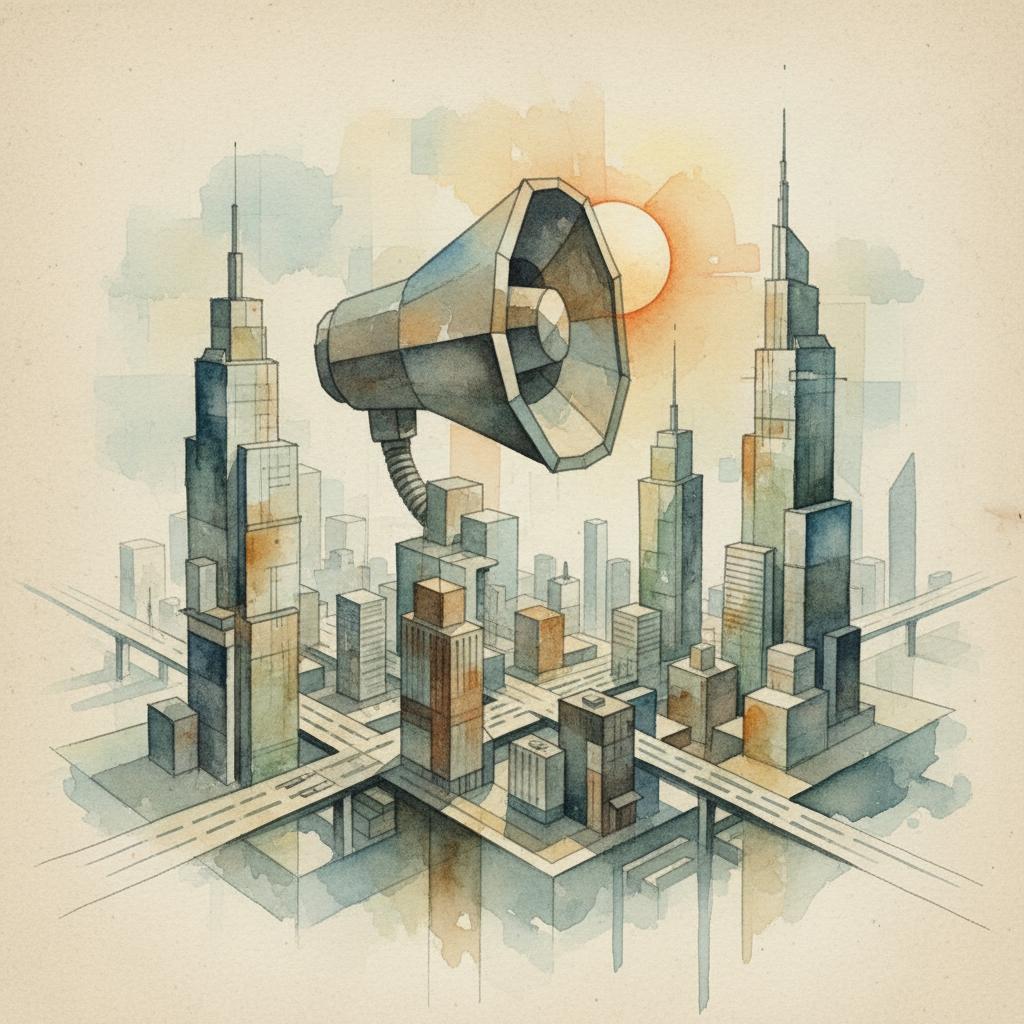
This placed sensitive internal information on external servers, according to reporting by PCMag.
Later in 2023, Samsung banned staff use of public generative-AI tools, reportedly in response to the incident.
The ban was driven by the concern, described in an internal memo, that once data is entered into ChatGPT it is transmitted to external servers and cannot be retrieved by the company, according to Bloomberg.
Key Points
- Samsung’s 2023 ChatGPT incident illustrates how routine prompts can move proprietary code onto external servers outside direct corporate control, according to 2023 reporting.
- U.S. trade-secret law reportedly requires reasonable measures to maintain secrecy (as of February 2026, per cited sources).
- Provider promises not to train on client data may reduce one risk but can leave retention, breach and subpoena exposure largely unchanged.
- OpenAI’s 2026 plan for licensing and outcome-based pricing, as described by CFO Sarah Friar, suggests that at least one major platform is exploring ways to share in AI-driven results.
- Self-hosting smaller models, linked to internal systems through the Model Context Protocol and monitored by evaluation pipelines, is presented here as a way to make high-sensitivity work more defensible.
Custody and Trade-Secret Law
U.S. trade-secret law defines a “trade secret” as information that derives independent economic value from not being generally known and for which the owner has taken reasonable measures to keep it secret, according to 18 U.S. Code § 1839 as published by Cornell Law.
Placing such information on infrastructure a firm does not control may complicate any later claim that secrecy measures were reasonable.
Even if a provider pledges strict access controls, the owner has ceded practical custody of the data and must rely on another party’s security practices, incident response and approach to legal process.
More Technology Articles



Contract Limits and Emerging Royalty Models
Many enterprise AI buyers focus on whether customer data submitted through APIs is used to train models for other clients.
Contractual clauses that limit such training can narrow the risk of inadvertent disclosure through model outputs. However, they do not directly address how long data is retained, which staff can access it, or how it may be handled under subpoenas and other legal requests.
In a 2026 article on OpenAI’s business model, CFO Sarah Friar wrote that future revenue will include “licensing, IP-based agreements, and outcome-based pricing.”
She described economic models that “will share in the value created” as intelligence moves into areas such as scientific research and drug discovery, according to OpenAI.
For deep-tech firms, this prospect turns an infrastructure choice into an IP negotiation. Questions arise about what counts as a qualifying outcome, how contribution is measured, and whether any payment obligations could attach to patent families or product revenue that depend on AI-assisted work.
Connected Models Expand Exposure
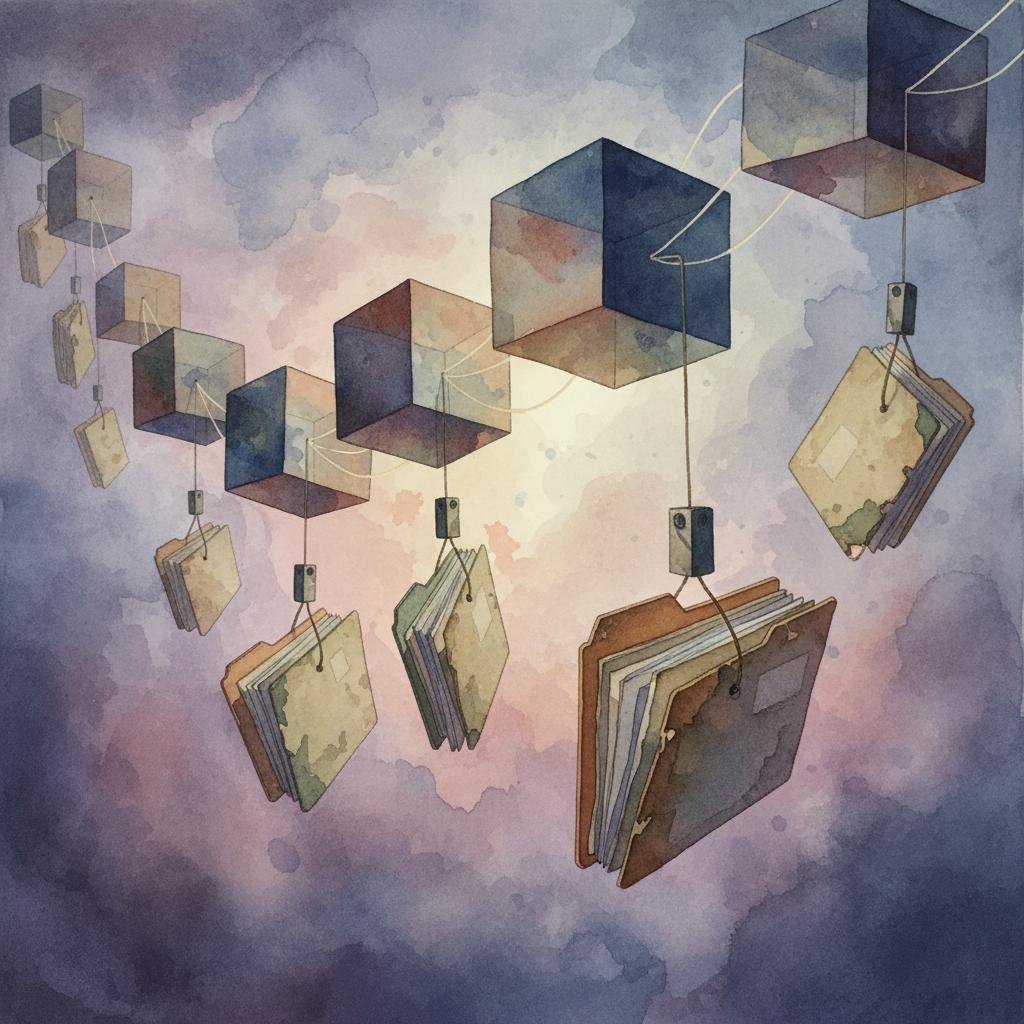
Modern deployments do more than accept pasted prompts. Through bidirectional interfaces they can reach code repositories, laboratory systems and data warehouses.
Anthropic introduced the open Model Context Protocol (MCP) in 2024 as a standard for connecting AI assistants to external data sources, business tools and development environments, according to Anthropic.
Connectivity can raise capability and risk at the same time. When the model runs on external infrastructure, each additional API connection increases the amount of sensitive data that could be exposed or acted on unexpectedly.
When the same protocol links an on-premises model to internal systems, the risk profile can shift. Access stays inside the firewall and can be constrained by local identity and authorization controls.
Performance Trade-Offs of Self-Hosting
Public evaluations indicate that the most advanced frontier models set the highest benchmarks on complex reasoning, coding and scientific tasks.
The 2025 Frontier AI Trends Report, for example, describes frontier systems completing longer and more demanding software and cyber tasks than earlier models. They also achieved higher success rates on autonomy evaluations, according to the AI Security Institute.
Bridging the gap between those frontier services and smaller self-hosted models typically entails additional engineering. This includes retrieval pipelines to supply domain data, protocols such as MCP to invoke internal tools, and systematic evaluation to monitor error modes.
These costs are quantifiable engineering investments and may decline over time as model weights improve and specialised hardware becomes cheaper.
Tiered Custody as Transition
A practical approach classifies workloads by sensitivity. High-risk tasks such as unreleased designs, vulnerability research and regulated datasets can run on self-hosted models.
This setup can include MCP connectivity limited to internal services and fine-grained audit logs to show how data and tools were used.
Lower-risk activities such as generic documentation drafts or public-domain literature review can continue on external APIs under “no-training” terms where available. These should be accompanied by redaction and approval gates.
Over time, as self-hosted performance improves, more workflows may migrate to this higher-custody tier.
Modelcontextprotocol.io is the documentation site for the open-source Model Context Protocol, which describes how to connect AI applications to external systems, data sources, tools and workflows.
Conclusion
Samsung’s incident and the prospect of outcome-based royalties both illustrate that custodial AI tools now sit close to the centre of deep-tech value creation.
When control of data and potential future revenue share both depend on a third party, self-custody becomes less a preference and more a defensible default for high-sensitivity work.
Tiered deployment guided by MCP and rigorous evaluation offers one way for organisations to move in that direction. It allows them to continue using advanced AI where its benefits clearly outweigh the custody risks.
Sources
- Emily Dreibelbis. "Samsung Software Engineers Busted for Pasting Proprietary Code Into ChatGPT." PCMag, 2023.
- Mark Gurman. "Samsung Bans Staff's AI Use After Spotting ChatGPT Data Leak." Bloomberg, 2023.
- OpenAI (Sarah Friar). "A Business That Scales with the Value of Intelligence." OpenAI, 2026.
- Anthropic. "Introducing the Model Context Protocol." Anthropic, 2024.
- Cornell Law School. "18 U.S. Code § 1839 – Definitions." Cornell Law School, 2016.
- AI Security Institute. "Frontier AI Trends Report." AI Security Institute, 2025.
- Model Context Protocol. "What is the Model Context Protocol (MCP)?" Model Context Protocol, 2024.
Article Credits